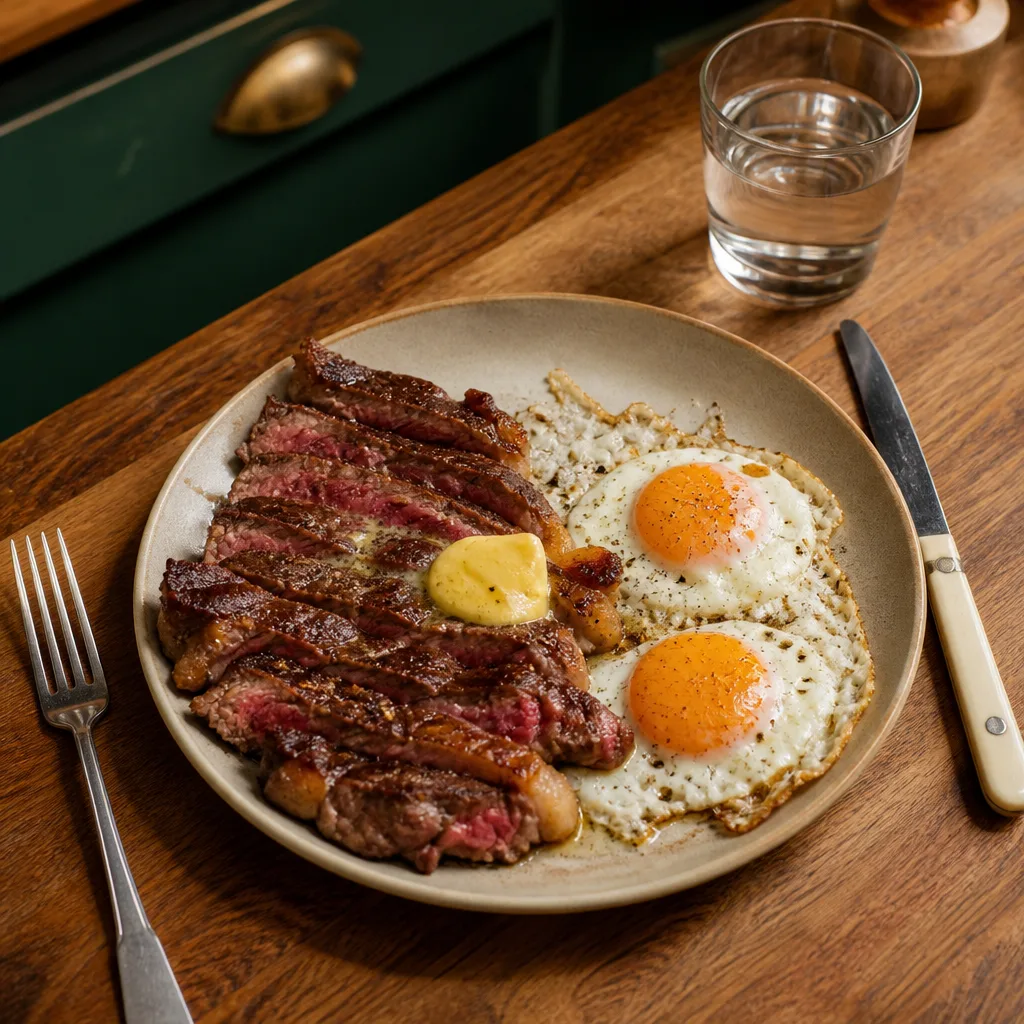
If you are going to consider something, you should be able to see it clearly first. This article describes the eating pattern used in the metabolic psychiatry research without softening it, because a vague description is worse than useless — you cannot research a diet you cannot name, and you cannot discuss one with your GP.
What is included
- Meat. Beef, lamb, pork, poultry, game. Fattier cuts rather than the leanest, since fat supplies most of the energy.
- Offal. Liver, kidney, heart. These matter more than they sound: they carry nutrients that muscle meat does not, and they are the main reason a well-constructed version of this diet is less deficient than a careless one.
- Fish and shellfish. Oily fish especially — mackerel, sardines, salmon, herring.
- Eggs.
- Animal fats. Butter, ghee, tallow, lard, dripping.
- Dairy, in some versions. Hard cheese, cream. Stricter versions leave it out.
What is excluded in the strictest version
All plant foods. Specifically:
- Grains and anything made from them — bread, pasta, cereal, oats, rice.
- Potatoes and other starchy vegetables.
- Pulses — beans, lentils, chickpeas.
- Vegetables of every kind, including salad and leafy greens.
- Fruit, including berries.
- Nuts and seeds.
- Vegetable and seed oils.
- Sugar in all forms, and almost all processed food.
Less strict versions of a ketogenic diet keep non-starchy vegetables, some nuts and small amounts of berries while still keeping carbohydrate very low. The trials in this field have used both approaches, and the three-person case series used a personalised animal-based version.
What that actually means for your body
Three consequences worth being clear about, because they drive everything in the risks article:
- Very little or no carbohydrate, which is the point — it is what produces ketosis.
- Almost no fibre, in the strictest version none at all. Bowel habits change, usually within days.
- No dietary vitamin C from plants. Fresh meat and offal contain some, and the requirement appears to fall when carbohydrate intake is very low, but this is a genuine open question rather than a solved one.
What a day might look like
Three eggs fried in butter with bacon. A steak with its fat left on. Tinned sardines. Lamb chops. A piece of liver once or twice a week. Salt, water, and that is largely it.
It is simple. It is also monotonous, socially awkward, and more expensive than most people expect.
What this article is not
It is not a recommendation to eat this way, and it is not an instruction. Whether this is a reasonable thing for you to do depends on your health, your medication and your history, and that is a conversation for a doctor who knows all three.
In particular, if you have a history of disordered eating, a diet that removes entire food groups is a poor fit — please read the article on restriction before anything else on this site.
Where to go next
General education, not a diagnosis and not a treatment. If your mood has been low for weeks, your GP is the next step.
Explore the guides